Showing posts with label 7. Show all posts

Wednesday, August 15, 2012

A Few Sedums and a Stonecrop


I have never really been a huge cactus fan. I grew up in southern Colorado where Opuntia were more common than trees. There they would be under all that deep white snow, just waiting for you to step or fall on them... or perhaps they would punish you for wearing flip flops?

They certainly did not foster in me a love of succulents. No, I only began to like them my first summer working at Perennial Favorites. I was asked to head over to the xeric section and pick out some super cool succulent sedums for my bosses to take to a farmer's market. I had never seen plants that looked so outlandish in my life... they looked like they had come straight from Mars! Now that I've had a few years to see even more outlandish plants, sedums seem so run-of-the-mill now.

But really, who cares how common they are! They're so cool!
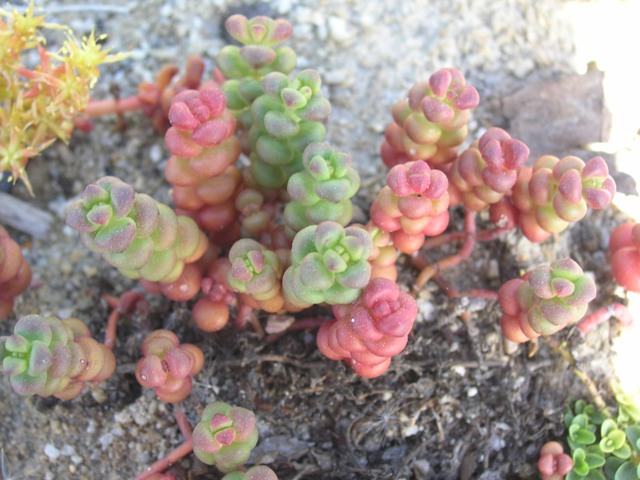
Sedum globosum or Old Man's Bones

All the pictures of S. globosum seem to show them as primarily green... but what we sold was really quite red. A hardy sedum that easily withstands the 5a winters, Old Man's Bones is a must have. It doesn't grow as quickly as other sedums and it's not "full" enough to be a good ground cover (in my opinion). Mine have withstood scarce watering, blistering hot sun, hail, and even deer. Any bits that break off quickly root and it will gradually spread every year.

("Sedum") Hylotelephium 'Purple Emperor'

'Purple Emperor' was my absolute favorite plant to water. As the water would land on the leaves, it would act differently than it would on any other surface. It would stick together in these beautiful round droplets, almost like clear marbles only a bit flatter. When kept in the greenhouse the foliage would be green but once it was put outside into the sun, it would very quickly turn a nice dark purple. It grew about a foot tall, Zones 4a - 10b (DG), and was pretty resistant to drought. I bought some and planted it up in a hypertufa planter. The main plant died down in the winter and I was afraid I had lost it... but then as the snow melted, lo and behold, 4 little shoots were at the base! They looked almost like bamboo shoots. They readily returned the following spring, until hail pummeled it beyond recognition... stupid hail. (It may also have been Hylotelephium 'Xenox', tags and catalog conflicted)

Sedum pachyclados

S. pachyclados doesn't really look sedum-ish to me. It was still super cool though... my bosses only ever had it on sale once out of the three summers I worked for them since it was so slow growing for them. It looked absolutely fantastic in the hypertufa planter they had it displayed in. Definitely a lesson learned there... if a plant is on display, try to keep it in stock! People asked for it all the time. Zones 4a - 9b (DG), it it a pretty hardy succulent. My bosses would always bring it in every winter anyway, but I'm sure it would have done fine left outside. The garden center just down the road has some of these... I may have to buy some!

Sedum hybridum

Haha... S. hybridum... I have some growing in a tiny little pot on my window sill right now. We had just gotten finished dividing these when my boss Diana decided to pot me up a few plants. Very tiny, very cute, immediately got buds and bloomed cheerily. I later had to get replacements due to a severe mealy bug infestation on them, but otherwise, they were pretty neat. Zones 3a - 9b (DG) and quick to grow and spread, it's a very lively sedum indeed. The only thing is is that it loves sun and I, being the weirdo that I am, decided to keep it inside under a grow light. The leaves which are usually long and thin stayed on the plant but all new leaves were shorter,  rounder, and smaller... This plant really looks very different depending on the amount of light it gets and it helped me grasp the whole concept of sunlight-on-plants-is-different-than-fluorescent a little better.

Sunday, August 12, 2012

Leaves are cool too!

I love interesting foliage. Leaves are there all the time, not temporary at all like flowers are. I can enjoy them any time of the year. The fact that my plants never re-flower might be part of that but... anyway, have some cool foliage!


Banksia grandis

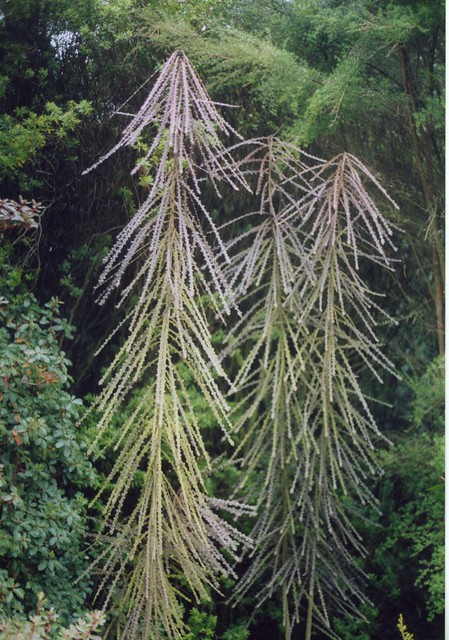
It seems like all the cool trees come from Australia. Banksia grandis gets from 16' to 32' in height and Annie's Annual's puts this at Zones 9 - 11. The foliage is pretty darn neat, just a bunch of triangles hanging from branches, giving it a saw-toothed sort of look. And what are those pinecone things on it? The lighter ones are bundles of flowers which reach 12" in length. The darker toned ones with those odd "duckbills" on them are the seedpods and the duck bills are where the seeds pop out. The seed pods are pretty woody and are sometimes sculpted into vases or other nifty things (as seen above).


Araucaria bidwillii

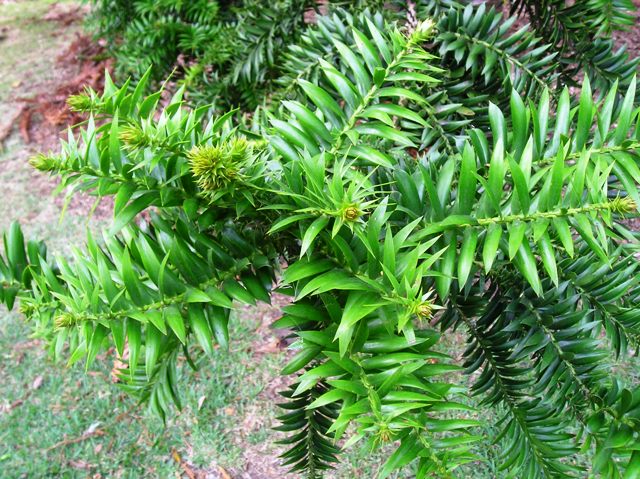
This tree is also from Australia. I suppose it's a confier but its pines are very different from any run-of-the-mill pine tree! Wikipedia says it can grow anywhere from 98' to 147' which is pretty impressive. Its pine cones are just huge enough to match it! Dave's Garden puts A. bidwillii at Zones 8b - 11, making it only just slightly more accessible for growers around the world. Because of its immense height, I don't know anyone who would grow it indoors without some major pruning.... 
Araucaria araucana

A member of the same genus as our previous conifier, Araucaria araucana is next. Most commonly known as a the monkey puzzle or monkey tail tree, it grows in Chile, Argentina, and Brazil naturally and can reach heights of about 130' tall with a 7' trunk diameter. It's Zones are listed on DG as 7b - 10b and Wikipedia seems to praise it for its hardiness in comparison to the rest of the genus. Interestingly enough, its seeds are a food crop in Chile and have the potential to be a major one in other areas. Mature trees can produce several thousand nuts in a year but it takes 30-40 years for trees to mature... I think it would be worth planting a small orchard for definitely. Maybe the nuts could be the next acai berry or goji berry, haha. If you do want nuts though, it would be best to get more than one tree seeing as A. araucana is usually dioecious. I know I will definitely plant a couple... as long as their branches don't try to land on me. I swear, those leaves look like shuriken!


Pseudopanax ferox

This handsome fellow is native to New Zealand and DG puts it in Zones 8b - 10a. As a juvenile the tree will look much like the bottom most picture. Leaves up to about 15" line most of the tree and are wonderfully toothy and dark in color. The tree takes about 10 to 15 years to mature and once it does the leaves become shorter, wider, and more green in color. So, while some plants take years to be cool, this one is coolest at a young age and gradually becomes less extreme as it ages. Don't get me wrong, the mature trees look great, just not as neat.

Selenicereus anthonyanus

Oh look, something that's not a tree! A cactus from southern Mexico, S. anthonyanus is an epiphyte. Seems to do pretty well in hanging baskets, blooms are night, and is easy to propagate and grow in general. DG puts it at Zones 10a - 11, so definitely something to keep inside! It's common names are Ric Rac (Orchid) Cactus and Fishbone Cactus. Flowers range in colors but most seem to be like the one pictured or yellow. Requires moist soil high in organic matter but I'm sure drainage is still important. Full sun or part shade should be fine. (I really really want this one! So cool!)

Christia obcordata

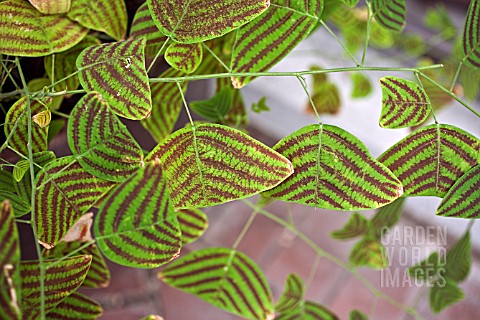
Commonly called Butterfly Leaf or Swallow Tail, DG puts it at Zone 11 only. Reviews on DG seem to indicate that it's a bit finicky and hard to grow but it sounds like as long as you keep it pretty wet and feed it regularly it'll be fine. An interesting tender perennial that looks like it'd be cute in a pot, I'd definitely grab it if I saw it, if only to give it a go.

Dyckia fosteriana in bloom
Dyckia beateae

Dyckia discoides


Dyckia... no matter what the species, these  Brazilian/South American bromeliads come in all kinds of interesting shapes, colors, and sizes. Their leaves are thick and spiny, the plant clumps, it's supposedly the hardiest kind of bromeliad (prefering 40-90F and easily withstanding lower temps), it's primitive, and finding any for sale is lucky. I've yet to see any personally, but oh my god, I think I'm in love. New species are still being found... I wish I was a part of that! But no, I haven't even started college for botany yet. Oh well, hopefully there will still be plants out there for me to discover! Great sources to learn more about Dyckia include: the Dyckia Brazil blog and this Bromeliad Society/Houston page


There are so many more plants I can think of that have interesting foliage but...this post is long enough haha.