Showing posts with label cactus. Show all posts

Sunday, September 16, 2012

Pine Cones on Anything but Pine Trees

When I think of pine cones, I think of gymnosperms. The term means "naked seed", due to the lack of fruit produced by all gymnosperms. There are some angiosperms out there, though, which seem to resemble pine cones. Is it out of random happenstance or some parallel evolution? Probably both.


Leuzea conifera

This Leuzea conifera is in the daisy family, which makes a lot of sense since the flower somewhat resembles a thistle's. I first heard of this one while reading a post on my boss's blog. Sadly, I never did find one sitting out for sale, but I definitely would have bought one! I know it's hardy in Zone 5 and can take a good lot of drought and neglect. It also propagates fairly easily, always a plus. Look at this article if you wanna know just a tid bit more.
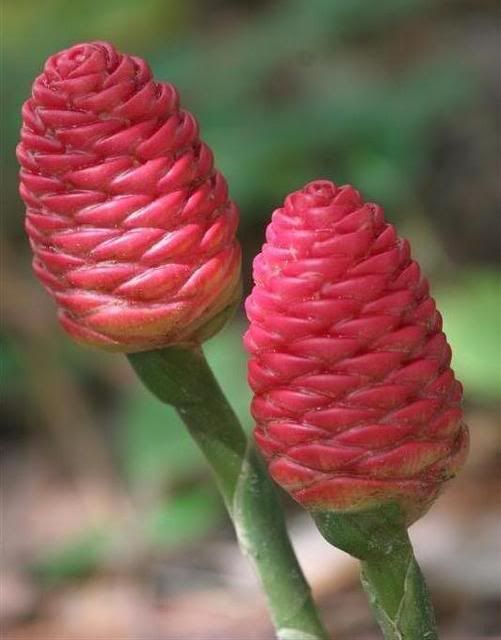
Zingiber zerumbet

Zingiber spectabile


Zingiber is a really weird sounding genus isn't it. Really exotic and unique. Looking at the examples above, their flowers seem out of this world. What could they be? Ginger. Neither of these gingers produces the rhizome that you buy in the store, but they're related and are also culinary to an extent. They do love warm temperatures though so if you're looking to grow a Zingiber outside, having a zone rating of at least 8 is helpful, although most of them like zone 11 more.


Guzmania conifera

A bromeliad from Peru and Ecuador, Guzmania conifera seems to make for a really decent houseplant. It enjoys (bright) indirect light and humidity. I could see myself growing it here in Oregon...  except for the fact that it's a bit expensive!

Boschniakia hookeri

B.hookeri is in the broomrape family and as such, it's a parasite. It feeds off of the nutrients in the roots of the Salal bush using haustoria which penetrate and grow into the roots but not into the root cells themselves.  Pale colored flowers grow from in between each overlapping bract. I've always thought parasitic plants were super cool. Indian Paintbrush and Indian Pipe are two of my favorite. Sure, they look awesome, but the challenge of growing them also offers its own allurement.
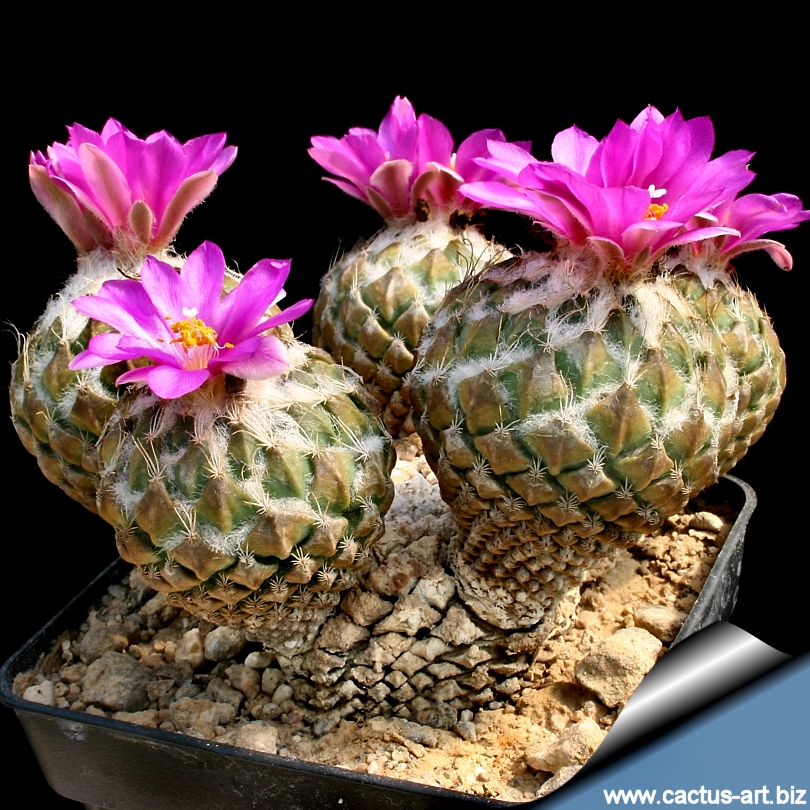
Encephalocarpus strobiliformis

E. strobiliformis is supposed to be hardy up to Zone 9a and enjoy full sun to part shade. It also has a few synonyms, indicating that it's one of those plants that always has the same species name but an ever-changing genus. Does it belong to PelecyphoraAriocarpus? Or just Encephalocarpus? The world may never know. The only thing that remains clear is that... it looks like a pine cone.

Annona squamosa

Ginger isn't the only edible plant on this list. Annona squamosa or the Sugar Apple is a small tree/bush forms these weird fruits in the same way a raspberry does. I've never tasted them or seen them, so one would be better off to consult a certain internet encyclopedia that describes it. The Sugar Apple is only hardy in Zones 10 and 11, which always bums me out. The coolest things always seem to like zones I don't care to live in!
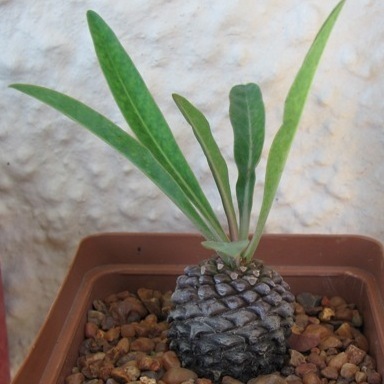
Euphorbia bupleurifolia


Anyone who owns a Euphorbia bupleurifolia should count themselves lucky. Sure, it may not be completely ridiculously rare in cultivation, but it is threatened in its natural habitat. It's always a shame to find out that some of the coolest and oddest looking plants are endangered because people couldn't wait to propagate them and just plucked them from the wild. Here's a link to someone who owns one.

I think I'll start trying to keep these posts short 'n' sweet. Typing up a longer one always drains the enthusiasm I felt while finding all the images! Live and learn.

Friday, August 24, 2012

Hug Me?

Lately I've been looking at cacti wondering about how easy/difficult they might be to grow. I've been buying seed trays and hunting down easy succulents to get my little hobby going, but there just wasn't enough danger. Where is the thrill in handling Echeveria paragynese or growing Kalanchoe "Mother of Thousands"? Sure, they're a bit prolific, but there's no excitement or thrill. And then I thought, well, why not cacti?

Rebutia seems so be a good genus for fast growing cacti. They're all pretty small, stay in a cute, globular form, and lots of them clump! Even better, they're known for producing plenty of seed.

Rebutia narvaecensis

Rebutia narvaecensis is one of my favorites that I've seen, mainly because I love light pink cactus flowers. I'm not very girly usually, but this color really gets me sometimes. Anyway though! DG puts it at Zones 9b - 11, full sun to light shade, and CAUTION... it might be kind of pointy. Almost reminds me of the warning label on watermelon I saw recently: "Caution, may contain the occasional seed." 

Rebutia heliosa 'Sunrise'

This Rebutia means business. Looks like it would be fantastic for people who want a prolific cactus. I can only imagine what separating the pups would be like though... Same stats as Rebutia narvaecensis which is part of what makes this genus an awesome (and frequently sold) houseplant. It can take light shade and be okay! Of course, not all Rebutia sp. are the same since the genus is a mish-mash of other, obsolete genera which you can learn more about here. 

Cylindropuntia bigelovii or the Teddy Bear Cholla

There comes a point where plants can become a bit infamous for how well they spread, and the Teddy Bear Cholla is definitely one of them. If an animal or person happens to brush up against this Cholla, even just barely, a segment will break off and stick to them. Even just stepping on the ground beside one will cause them to drop down from above. What's the worst part? The spines are barbed, making your best option to clip of the spines and use pliers to pull them out later. As a result, Teddy Bear Cholla spread into forests pretty easily. They can be anywhere from 1'-5' tall and sometimes desert rodents will grab bits of the plant and put it outside of their dens to protect them. DG puts this cactus at Zones 8b - 11 which makes sense, as it lives in California, Arizona, Nevada, and a bit of Mexico. 

I've always joked about throwing cactus bits at people who I don't like. I take it back... here are some videos that describe Teddy Bear better than I can possibly hope to.


And with these, I'm stopping here. I would post more but... I think I've lost my appetite for cacti for today. Ouch!!


Sunday, August 12, 2012

Leaves are cool too!

I love interesting foliage. Leaves are there all the time, not temporary at all like flowers are. I can enjoy them any time of the year. The fact that my plants never re-flower might be part of that but... anyway, have some cool foliage!


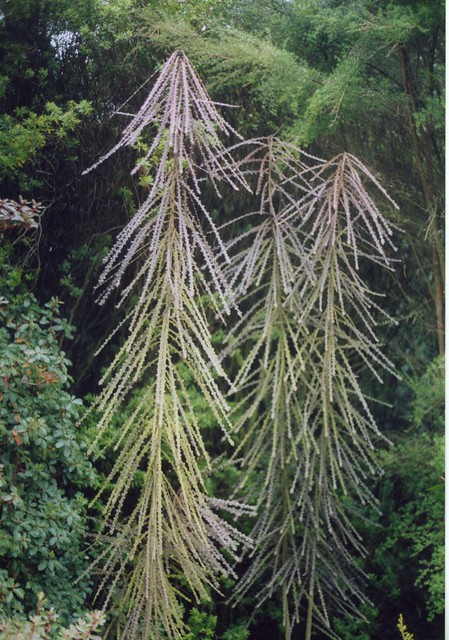
Banksia grandis

It seems like all the cool trees come from Australia. Banksia grandis gets from 16' to 32' in height and Annie's Annual's puts this at Zones 9 - 11. The foliage is pretty darn neat, just a bunch of triangles hanging from branches, giving it a saw-toothed sort of look. And what are those pinecone things on it? The lighter ones are bundles of flowers which reach 12" in length. The darker toned ones with those odd "duckbills" on them are the seedpods and the duck bills are where the seeds pop out. The seed pods are pretty woody and are sometimes sculpted into vases or other nifty things (as seen above).


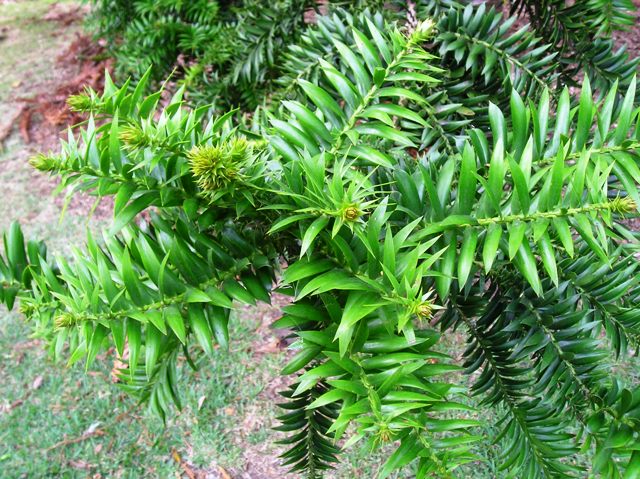
Araucaria bidwillii

This tree is also from Australia. I suppose it's a confier but its pines are very different from any run-of-the-mill pine tree! Wikipedia says it can grow anywhere from 98' to 147' which is pretty impressive. Its pine cones are just huge enough to match it! Dave's Garden puts A. bidwillii at Zones 8b - 11, making it only just slightly more accessible for growers around the world. Because of its immense height, I don't know anyone who would grow it indoors without some major pruning.... 
Araucaria araucana

A member of the same genus as our previous conifier, Araucaria araucana is next. Most commonly known as a the monkey puzzle or monkey tail tree, it grows in Chile, Argentina, and Brazil naturally and can reach heights of about 130' tall with a 7' trunk diameter. It's Zones are listed on DG as 7b - 10b and Wikipedia seems to praise it for its hardiness in comparison to the rest of the genus. Interestingly enough, its seeds are a food crop in Chile and have the potential to be a major one in other areas. Mature trees can produce several thousand nuts in a year but it takes 30-40 years for trees to mature... I think it would be worth planting a small orchard for definitely. Maybe the nuts could be the next acai berry or goji berry, haha. If you do want nuts though, it would be best to get more than one tree seeing as A. araucana is usually dioecious. I know I will definitely plant a couple... as long as their branches don't try to land on me. I swear, those leaves look like shuriken!


Pseudopanax ferox

This handsome fellow is native to New Zealand and DG puts it in Zones 8b - 10a. As a juvenile the tree will look much like the bottom most picture. Leaves up to about 15" line most of the tree and are wonderfully toothy and dark in color. The tree takes about 10 to 15 years to mature and once it does the leaves become shorter, wider, and more green in color. So, while some plants take years to be cool, this one is coolest at a young age and gradually becomes less extreme as it ages. Don't get me wrong, the mature trees look great, just not as neat.

Selenicereus anthonyanus

Oh look, something that's not a tree! A cactus from southern Mexico, S. anthonyanus is an epiphyte. Seems to do pretty well in hanging baskets, blooms are night, and is easy to propagate and grow in general. DG puts it at Zones 10a - 11, so definitely something to keep inside! It's common names are Ric Rac (Orchid) Cactus and Fishbone Cactus. Flowers range in colors but most seem to be like the one pictured or yellow. Requires moist soil high in organic matter but I'm sure drainage is still important. Full sun or part shade should be fine. (I really really want this one! So cool!)

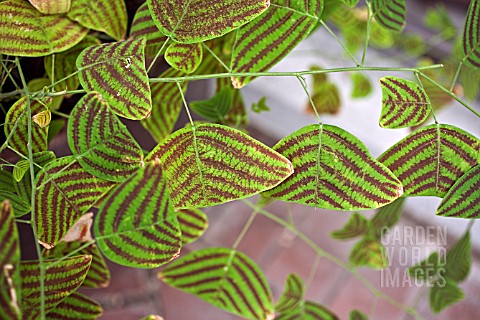
Christia obcordata

Commonly called Butterfly Leaf or Swallow Tail, DG puts it at Zone 11 only. Reviews on DG seem to indicate that it's a bit finicky and hard to grow but it sounds like as long as you keep it pretty wet and feed it regularly it'll be fine. An interesting tender perennial that looks like it'd be cute in a pot, I'd definitely grab it if I saw it, if only to give it a go.

Dyckia fosteriana in bloom
Dyckia beateae

Dyckia discoides


Dyckia... no matter what the species, these  Brazilian/South American bromeliads come in all kinds of interesting shapes, colors, and sizes. Their leaves are thick and spiny, the plant clumps, it's supposedly the hardiest kind of bromeliad (prefering 40-90F and easily withstanding lower temps), it's primitive, and finding any for sale is lucky. I've yet to see any personally, but oh my god, I think I'm in love. New species are still being found... I wish I was a part of that! But no, I haven't even started college for botany yet. Oh well, hopefully there will still be plants out there for me to discover! Great sources to learn more about Dyckia include: the Dyckia Brazil blog and this Bromeliad Society/Houston page


There are so many more plants I can think of that have interesting foliage but...this post is long enough haha.